Testing & Quality Assurance
The Backbone of Reliable Software
Get a Free Estimate
Get the Inside Scoop
Download Our Brochure Now!
Stay Connected
Follow Us on Social Media
Facebook
Instagram
Youtube
Quora
Linkedin
Pinterest
Threads
X-twitter
Reddit
Feel Free to Give Us a Call
We are Available 24×7
Introduction
Testing & Quality Assurance (QA) are critical components of the software development lifecycle, ensuring that products meet specified requirements and are free of defects.
Testing involves evaluating the functionality and performance of software applications through various methods, including unit testing, integration testing, system testing, and user acceptance testing. This process aims to identify any bugs or issues before the software is released, ensuring it operates as intended and meets user expectations.
Quality Assurance encompasses a broader range of activities focused on preventing defects and improving processes. QA involves the implementation of standards, procedures, and best practices to ensure that the development process is efficient and that the final product is of the highest quality. This includes activities like code reviews, process audits, and continuous integration practices.
Key Benefits of Testing & Quality Assurance
Improved Product Quality: Regular testing helps identify defects and issues early in the development process, leading to a more reliable and higher-quality product.
Enhanced Customer Satisfaction: Delivering a well-tested product meets user expectations, increasing trust and satisfaction among customers, which can lead to better user retention and loyalty.
Reduced Costs: Identifying and fixing issues during the development phase is significantly less expensive than addressing them after deployment. This reduces the overall cost of development and maintenance.
Faster Time to Market: A solid QA process allows teams to identify and resolve issues quickly, leading to faster release cycles and enabling organizations to stay competitive in a fast-paced market.
Risk Mitigation: Testing helps identify potential risks and vulnerabilities, ensuring that security issues are addressed before the product reaches the end-users, reducing the likelihood of future crises.
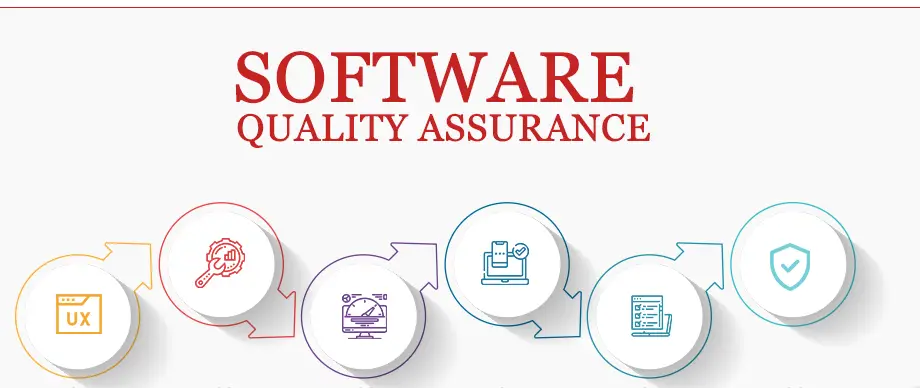
Testing & Quality Assurance Services We Provide :
Functional Testing
Verification of software functions against specified requirements to ensure all features operate as intended.Automated Testing
Implementation of automated test scripts for regression, performance, and other tests to improve efficiency and repeatability.Performance Testing
Evaluation of the software’s responsiveness, stability, scalability, and speed under various conditions to ensure it can handle expected loads.Security Testing
Identification of vulnerabilities, threats, and risks in the software to ensure data protection and compliance with security standards.Usability Testing
Assessment of the user interface and user experience to ensure the application is user-friendly, intuitive, and accessible.Compatibility Testing
Verification of the application’s functionality across different devices, browsers, and operating systems to ensure a consistent user experience.Integration Testing
Evaluation of the interactions between different modules and systems to ensure they work together seamlessly.User Acceptance Testing (UAT)
Collaboration with end-users to validate the software against business requirements and ensure it meets user needs before deployment.Regression Testing
Re-testing of the application after modifications to ensure that existing functionalities remain unaffected by the changes.Mobile Testing
Testing of mobile applications on various devices and operating systems to ensure optimal performance and user experience.
Our testing & Quality Assurance Process
Consultation:
We begin by understanding your project requirements and business goals
Planning:
Drafting a comprehensive architecture and timeline tailored to your project.
Design
Crafting an intuitive and engaging front-end experience using Testing & Quality Assurance
Development:
Building and rigorously testing your Testing & Quality Assurance application for optimal performance
Deployment:
Launching your application with real-time support and continuous monitoring.
At Levon Techno Solutions, our dedicated team of Testing & Quality Assurance developers excels in full-stack development, delivering high-performance applications tailored to your needs. We prioritize seamless user experiences and utilize a range of technology stacks that blend the best tools and frameworks.
Comprehensive Full-Stack Approach
Leverage our expertise across both front-end and back-end technologies for a cohesive development process.
Streamlined Starter Architecture
Kickstart your project with our well-researched starter architecture, designed to save development time and resources.
Optimized Performance
Enjoy applications that are fast and responsive, ensuring an exceptional user experience at every interaction.
Technologies We Use & Work With
At Levon Techno Solutions, we utilize a comprehensive tech stack to deliver exceptional PHP applications. Our expertise includes:
Ready to Start Your Testing & Quality Assurance Project?
Partner with Levon Techno Solutions, the best Testing & Quality Assurance company, to bring your web application to life. Reach out today to learn more about how our Testing & Quality Assurance expertise can transform your business.

Frequently Asked Questions
Clearing Doubts, Providing Clarity, and Empowering Informed Decisions
What is the difference between testing and quality assurance?
Testing focuses on identifying defects in the software, while quality assurance (QA) is a broader process that encompasses testing along with the development processes to prevent defects and ensure overall quality.
What are the different types of software testing?
There are various types of testing, including:
- Functional Testing
- Performance Testing
- Security Testing
- Usability Testing
- Regression Testing
- User Acceptance Testing (UAT)
Why is software testing important?
Software testing is crucial for ensuring product quality, enhancing user satisfaction, reducing maintenance costs, and mitigating risks associated with software failures.
What is user acceptance testing (UAT)?
User Acceptance Testing (UAT) is the final phase of testing where actual users test the software to ensure it meets their requirements and is ready for deployment.
What is a bug report?
A bug report is a document that describes a defect in the software, including details such as how to reproduce the issue, expected vs. actual results, severity, and environment information.
What is the role of a QA engineer?
A QA engineer is responsible for developing and executing test plans, identifying and documenting defects, ensuring compliance with quality standards, and collaborating with development teams to improve software quality.